What Are ROC Obligations?
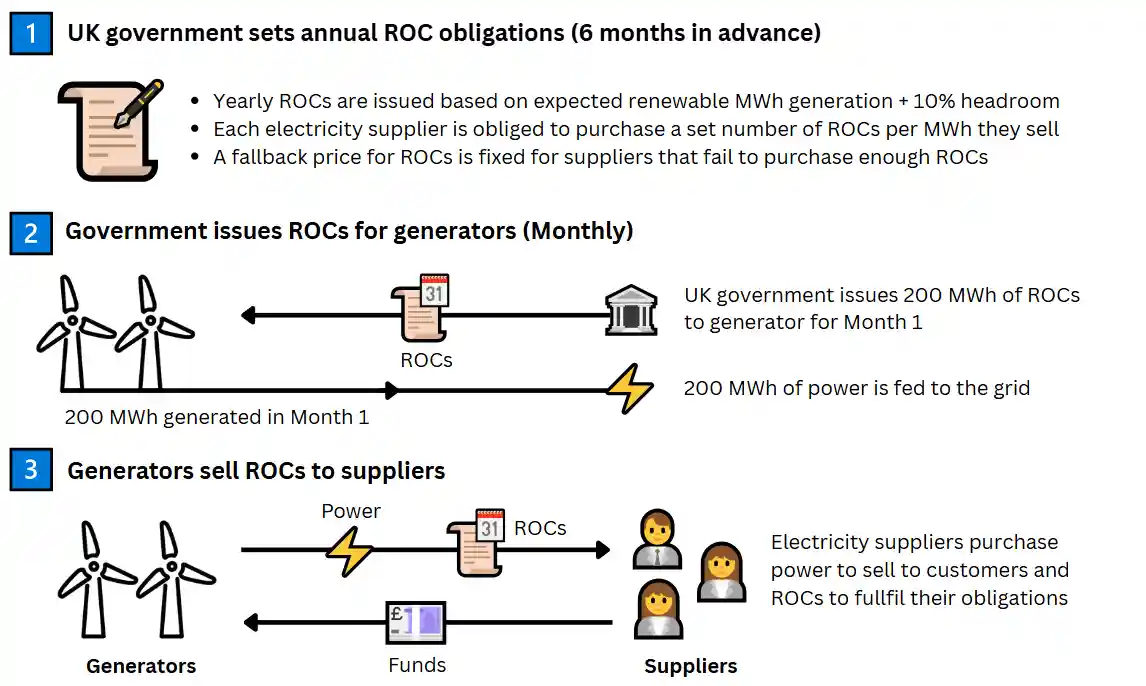
ROC obligations stem from the UK’s Renewables Obligation (RO) — a long-running renewable energy support scheme that helped grow the country’s clean electricity generation. Under this scheme, energy suppliers must prove they source a set amount of electricity from renewable sources by presenting Renewables Obligation Certificates (ROCs) each year.
What Does “ROC” Mean?
“ROC” stands for Renewables Obligation Certificate, which represents 1 megawatt-hour (MWh) of eligible renewable electricity generated in the UK. ROCs are issued to accredited renewable generators — such as wind farms, solar parks, biomass plants, and hydro stations — for each unit of clean electricity they produce.
How ROC Obligations Work
Each year:
- A ROC target level is set by government for electricity suppliers based on total electricity supplied.
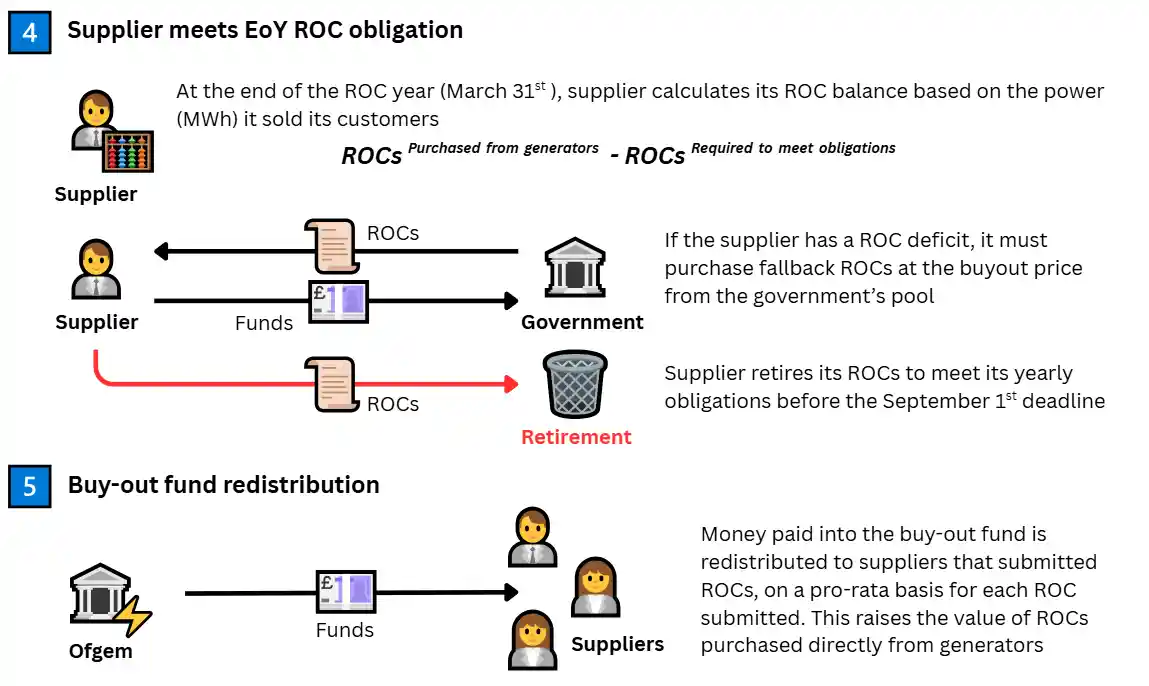
- Suppliers must submit enough ROCs to meet their obligation proportional to their total electricity sales.
- If suppliers don’t have enough ROCs, they must pay a buy-out price (a set fee per MWh).
- Buy-out payments are redistributed to suppliers who did present ROCs, rewarding compliance.
This system creates a market for ROCs — suppliers can trade certificates, and their value fluctuates with supply and demand.
Why ROC Obligations Matter
ROC obligations were created to encourage investment in renewable energy at a time when it was more costly than fossil fuels. By guaranteeing renewable generators a revenue stream through ROC sales, the scheme helped stimulate the UK’s early transition to low-carbon electricity.
Over two decades, ROCs supported technologies like:
- Wind power (onshore and offshore)
- Solar photovoltaic (PV)
- Biomass and anaerobic digestion
- Hydroelectric and tidal generation
Are ROC Obligations Still Active?
The Renewables Obligation scheme closed to new generation projects in 2017–2019, but existing renewable generators continue to receive ROCs for up to 20 years from accreditation. That means ROC obligations still exist as legacy requirements for suppliers and remain part of electricity pricing today.
How ROC Obligations Affect Energy Bills
Energy suppliers recover the cost of meeting ROC obligations by passing these expenses on to consumers through their bills — usually within policy and social charges rather than as a separate line item.
Although ROC-related costs decline over time as older generators exit the scheme, the legacy of early renewable support continues to influence electricity pricing during the transition to newer support mechanisms like Contracts for Difference (CfDs).
ROC vs. Newer Support Schemes
Today, most new renewable projects receive support under Contracts for Difference (CfD) — a mechanism that offers price stability and often delivers cleaner generation at lower long-term cost. In contrast, older ROC projects tend to be more expensive due to early technology costs.
Summary — Key Points
✔ ROC obligations are part of the UK’s historic Renewables Obligation scheme
✔ ROCs prove renewable electricity generation and ensure suppliers meet legal targets
✔ Suppliers either present ROCs or pay a buy-out price
✔ The scheme is closed to new projects but legacy costs remain
✔ ROC costs ultimately help fund the UK’s renewable energy transition