Energy Company Obligation (ECO): Explained Simply
The Energy Company Obligation (ECO) is a UK government scheme that helps people make their homes cheaper to heat.
It works by requiring large energy suppliers to pay for energy-saving home improvements.
As a result, many households can lower their energy bills, live in warmer homes, and cut carbon emissions.
What Is the Energy Company Obligation?
The government created ECO as a legal requirement for large gas and electricity suppliers.
Rather than funding upgrades directly, the government requires energy suppliers to fund them instead. This approach spreads costs across the energy system while directing help to the households that need it most.
ECO mainly supports:
- People on low incomes
- Vulnerable households
- Homes that cost a lot to heat
How Does ECO Work?
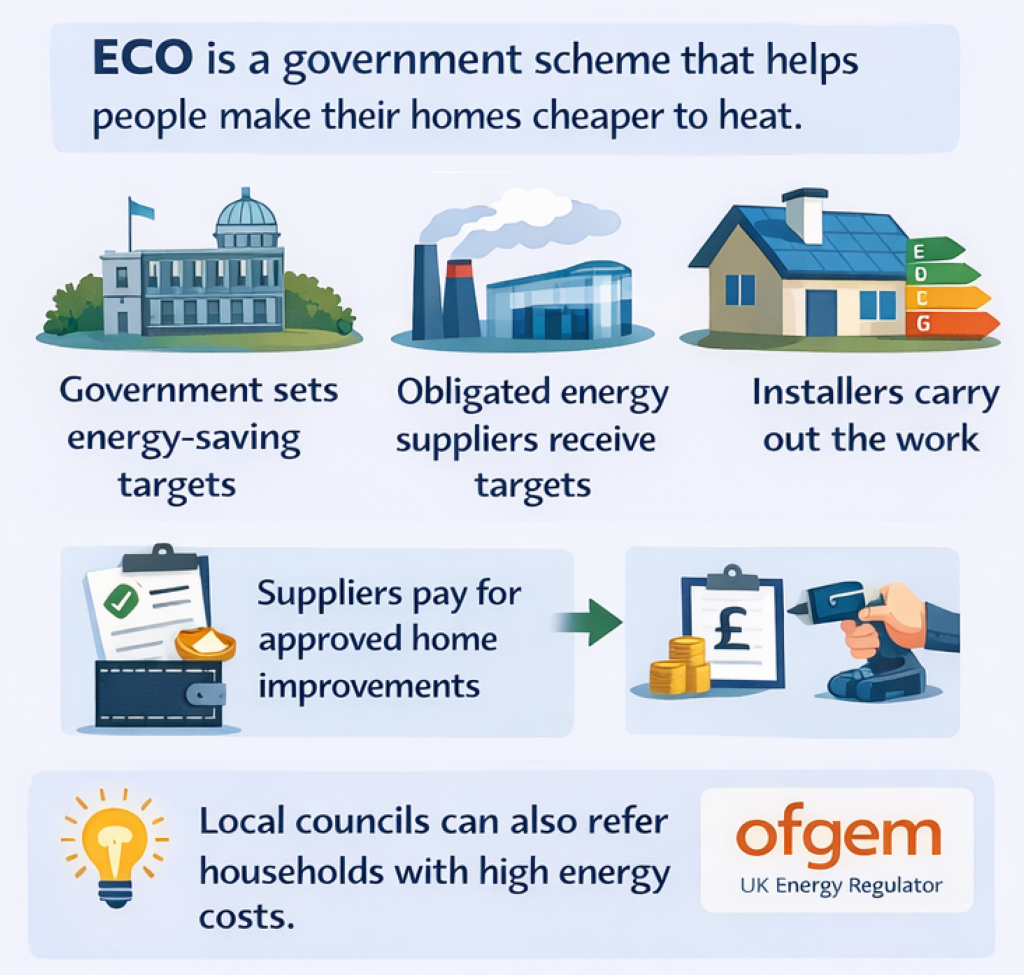
The ECO scheme follows a straightforward process.
First, the government sets energy-saving targets.
Next, large energy suppliers receive legal obligations to meet those targets.
Then, suppliers pay for approved energy efficiency improvements.
After that, trained installers carry out the work in people’s homes.
Finally, regulators check the results and confirm compliance.
If a supplier misses its target, regulators can issue penalties.
What Improvements Can ECO Pay For?
ECO funding helps pay for upgrades that make homes warmer and more energy efficient.
For example, ECO can fund:
- Loft insulation
- Wall insulation
- New or upgraded boilers
- Central heating in homes without it
- Heat pumps
- Heating controls
These improvements reduce energy use and help households spend less on heating.
Who Can Get Help Through ECO?
You may qualify for ECO support if you:
- Receive certain benefits
- Have a low household income
- Live in a home with poor energy efficiency
Local councils also play a role. Through flexible eligibility, councils can identify households that struggle with high energy costs, even if they do not receive benefits.
Before installers start any work, they assess each home to confirm eligibility.
What Does ECO Mean for Energy Suppliers?
Large energy suppliers play a central role in ECO.
What Suppliers Must Do
Suppliers must:
- Fund energy-saving improvements
- Meet government targets
- Follow strict scheme rules
Who Regulates ECO?
The energy regulator Ofgem oversees the scheme. It monitors supplier performance and takes action when suppliers fail to meet their obligations.
Does ECO Affect Energy Bills?
Suppliers usually recover ECO costs through energy bills. However, by improving home efficiency, the scheme lowers overall energy demand. Over time, this helps reduce pressure on bills.
Why Is the Energy Company Obligation Important?
ECO delivers clear benefits across the country.
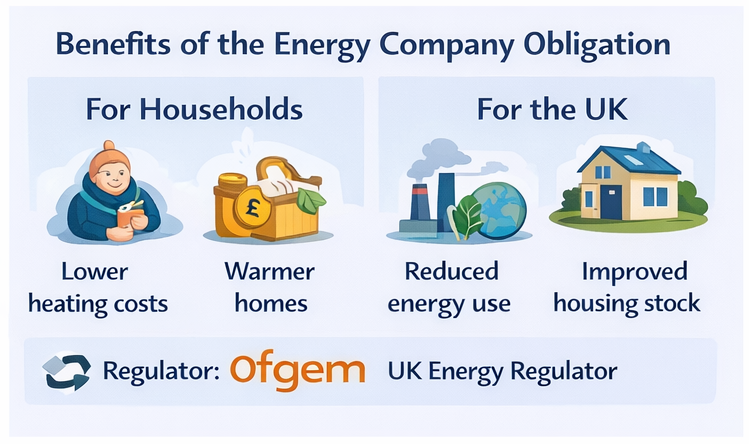
For Households
ECO helps people:
- Cut heating costs
- Stay warmer at home
- Reduce the risk of fuel poverty
For the UK
At the same time, ECO:
- Reduces wasted energy
- Lowers carbon emissions
- Improves the quality of the housing stock
ECO and Climate Change
Improving home energy efficiency offers one of the fastest ways to cut emissions. By targeting homes that need the most help, ECO supports a fair and affordable transition to cleaner energy.
Quick Summary: Energy Company Obligation
In short:
- ECO cuts emissions and lowers energy demand
- ECO helps people reduce heating costs
- Large energy suppliers pay for improvements
- The scheme supports low-income and vulnerable households
- Measures include insulation and heating upgrades